Heresies & Schisms in the Early Church


Written by Robert Jones

robertcjones@mindspring.com

Click here to see other courses that I've written

Click here to go to the Christian History & Theology home page


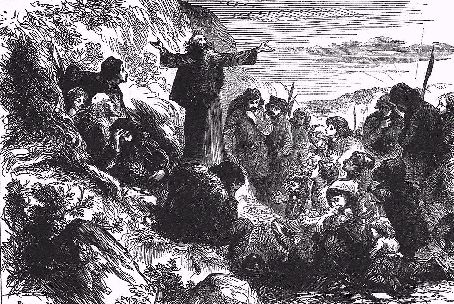
Albigensian worshippers on the banks of the Rhone (Engraving from Wylie)

  This material may be reprinted free of charge for use by non-profit church groups, as long as the author and copyright information is retained. 


Would you like to teach this course? 

$20.00 - You can purchase a Teacher's Pack, containing:


Click here to order via post

OR

(Note: Clicking on the "PayPal Buy Now" button allows you to order via MasterCard or Visa. You do not have to have a PayPal account.)


Copyright 2001 by Robert C. Jones

I'd love to hear about anyone that uses this material in their Sunday School classes!

robertcjones@mindspring.com

  "Scripture taken from the HOLY BIBLE, NEW INTERNATIONAL VERSION.  Copyright Ó 1973, 1978, 1984 by International Bible Society.  Used by permission of Zondervan Publishing House."


Table of Contents

Table of Contents

Introduction

Definitions

Heresy Quiz

Gnosticism

Origins and Influences

New Testament refutations and references

Gnostic Sources

Heresies and Schisms in the First Five Centuries

Simon Magus

Valentinian Gnosticism

Marcion

Response of the Church to 2nd Century Gnosticism

Montanist Heresy

Origen: On the Borderline

Manichaeism

Donatists

Arianism

Pelagianism

Nestorianism

Conclusion

Sources

Other Christian History & Theology courses

 Introduction

“For as they are heretics, they cannot be true Christians, because it is not from Christ that they get that which they pursue of their own mere choice, and from the pursuit incur and admit the name of heretics. Thus, not being Christians, they have acquired no right to the Christian Scriptures; and it may be very fairly said to them, “Who are you? When and whence did you come? As you are none of mine, what have you to do with that which is mine? Indeed, Marcion, by what right do you hew my wood? By whose permission, Valentinus, are you diverting the streams of my fountain?”  (Tertullian, The Prescription against Heretics”)

In this course we will attempt to look at some of the primary heresies and schisms of the first five centuries of the Christian Church, starting with New Testament references, and continuing through to the battles of St. Augustine against the Pelagians.  Along the way, we’ll examine the Gnostics (against whom much of the Apostles Creed was written), the followers of Arius (against whom much of the Nicene Creed was written), the Donatists, and others.

Why bother to study heresies and schisms that, purportedly died out 1500-1800 years ago?  Because strains of, say, Gnosticism have reappeared in modern religious systems such as the “New Age” movement, which sometimes claims to be compatible with Christianity.  A good example of the modern echoing the ancient might be seen by comparing the following quote from Star Trek V (spoken in a dialogue between Captain Kirk and Dr. McCoy after the enterprise has failed to find “God” in the “center” of the Universe), and a quote from 3rd century heretic Monoimus:

Star Trek V:  Dr. McCoy:  “Is God really out there?”

Captain Kirk: “Maybe he’s not out there, Bones.  Maybe he’s here – [in] the human heart”

Monoimus:  “…seek for Him from (out of) thyself, and learn…My God (is) my mind, my understanding, my soul, my body…if you accurately investigate these (points), you will discover (God) Himself, unity and plurality, in thyself, according to that title, and that He finds the outlet (for Deity) to be from thyself.” (The Refutation of All Heresies, Chapter 8, Hippolytus, Translated By The Rev. J. H. Macmahon, M.A)

Most heresies in the first five centuries centered around differing opinions on exactly who Christ was, what manner of being he was, and what the relationship was between Christ and God the Father.

Definitions

Before we embark on this journey, we should consider a few definitions.  The term heresy (as it is used today) means:

"An opinion or doctrine not in line with the accepted teaching of the church; the opposite of orthodoxy" (Holman Bible Dictionary)

The term comes from the Greek hairesis, which can mean “the act of choosing”, but was also occasionally used in the Bible to mean sect or party.  The term is used in various ways in the New Testament, as the chart below indicates:


Reference

Usage

Acts 5:17, 15:5, 26:5

Party or sect

Acts 24:14, 28:22

Used by Jews to describe groups that had left the mainstream of Judaism

1 Cor 11:19, Gal 5:20, Titus 3:10

Used by Paul to describe those that caused dissension

2 Pet 2:1

Used by Peter to describe False Prophets


The Gnostics were a prominent example of early “Christians” whose views on doctrine were radically different than those of the established church.

Another term that will prove useful in this discussion is schism, or an "ecclesiastical cleavage".  Schismatics didn’t necessarily disagree with Church doctrine, but rather disagreed with Church Law or practice.  Novatian and the Donatists probably originally fit into this category.  A later example of a schism in the established church was the Protestant Reformation – however, the Inquisition also viewed the early Reformers as heretics. 

Heresy Quiz

The quizzes in my courses are traditional T/F, and usually number 10-15 questions.  Here, we present only one multiple-choice quiz question.  There is only one correct answer, in terms of the accepted doctrines in the Christian Church.  All other answers reflect the views of various early heresies:

Pick the statement below that best describes the being of Christ: 

Gnosticism

The primary form of Christian heresy in the very Early Church was Gnosticism.  The term comes from the Greek word gnosis, meaning knowledge.  Gnosticism was vigorously refuted by Paul, John and Peter in the New Testament, as well as by many of the Early Church Fathers, including Irenaeus, Tertullian, Hippolytus, and Justyn Martyr.  General characteristics of Gnosticism include:

Origins and Influences

By modern standards, Gnosticism seems so different from Christianity as to be a different religion.  As it turns out, Gnosticism was a blend of Christianity with other Middle Eastern philosophies and religions, such as Zoroastrianism and Neo-Platonism.  We examine several of the influences here.

Misuse of Paul and John's writings 

Many of the early Gnostics used parts of the Apostle Paul’s writings as justification for their beliefs.  It should be noted that Paul himself vigorously refuted these misinterpretations of his theology.  Some examples include:


Early Gnostics also misused the writings of John the Apostle (who also vigorously refuted the misuse).   Some examples include:

Irenaeus (c. 180 A.D.) makes reference to the Gnostic misuse of John in his Against Heresies:

“Those, moreover, who follow Valentinus [a 2nd century Gnostic], making copious use of that according to John, to illustrate their conjunctions, shall be proved to be totally in error by means of this very Gospel…” (Irenaeus, Against heresies, Book 3, Chapter 11)

Neo-Platonism

“I am sorry from my heart that Plato has been the caterer to all these heretics.”  (Tertullian, A Treatise on the Soul)

A sort of “neo-Platonism” was extant in the Mediterranean in 1st century A.D.  One proponent was Jewish philosopher Philo of Alexandria, who believed:

Essenes  (“Pious Ones”)

The Essenes, described by Josephus as being one of the three Jewish religious sects or parties extant around the time of Christ, may have been the group that wrote all or part of the Dead Sea Scrolls.  The Dead Sea Scrolls tend to describe earthly life as a battle between good and evil (characterized as the Sons of Light/Sons of Darkness).  The scrolls also refer to two spirits governing man (truth and error).  Note that the Dead Sea Scrolls group solidly believed in the God of Moses, and were in no way dualistic.  However, later Gnostics could have interpreted their language as being dualist.  Two examples follow:

“At the beginning of the undertaking of the sons of light, they shall start against the lot of the sons of darkness, the army of Belial…so that wickedness shall be laid low without any remnant; and there shall be no survivor of the sons of darkness.”  (War of the Sons of Light Against the Sons of Darkness, Burrows, p. 390)

[God] “created man to have dominion over the world and made for him two spirits, that he might walk by them until the appointed time of his visitation; they are the spirits of truth and of error.  In the abode of light are the origins of truth, and from the source of darkness are the origins of error.  In the hand of the prince of lights is dominion over all sons of righteousness; in the way of light they walk.  And in the hand of the angel of darkness is all dominion over the sons of error; and in the ways of darkness they walk.  And by the angel of darkness is the straying of all the sons of righteousness...but the God of Israel and his angel of truth have helped all the sons of light.”  (Manual of Discipline, Burrows, p. 374) 

Zoroastrianism

Various Middle Eastern mystery religions also probably had a big impact on Gnosticism.  One was Zoroastrianism, founded by Persian Prophet Zoroaster (630? - 553? BC).  In this religion, a battle between light (Ormazd) and darkness (Ahriman) features prominently.  Zoroaster believed that new great prophets appear at 1,000 year intervals.

New Testament refutations and references

Gnosticism was already in existence as the books of the New Testament were being written.  Thus, we would expect to see some references and refutations of Gnosticism in the New Testament. 

One possible early reference can be found in Acts 8:9-24, with the story of Simon the Magician.  Simon is the sorcery that tries to buy the power of the Holy Spirit – and is denounced by Peter:

9Now for some time a man named Simon had practiced sorcery in the city and amazed all the people of Samaria. He boasted that he was someone great, 10and all the people, both high and low, gave him their attention and exclaimed, “This man is the divine power known as the Great Power.” 11They followed him because he had amazed them for a long time with his magic. 12But when they believed Philip as he preached the good news of the kingdom of God and the name of Jesus Christ, they were baptized, both men and women. 13Simon himself believed and was baptized. And he followed Philip everywhere, astonished by the great signs and miracles he saw.

18When Simon saw that the Spirit was given at the laying on of the apostles’ hands, he offered them money 19and said, “Give me also this ability so that everyone on whom I lay my hands may receive the Holy Spirit.” 20Peter answered: “May your money perish with you, because you thought you could buy the gift of God with money! 21You have no part or share in this ministry, because your heart is not right before God. 22Repent of this wickedness and pray to the Lord. Perhaps he will forgive you for having such a thought in your heart. 23For I see that you are full of bitterness and captive to sin.”

24Then Simon answered, “Pray to the Lord for me so that nothing you have said may happen to me.”” (Acts 8: 9-12, 18-24, NIV)

  The New Testament writers, including Paul, John, Peter and Jude, repudiated Gnostic thought in their writings.  Some examples are below.  It should be noted that in a few cases, there might be other groups that are being refuted, also.


Heresy Refuted

Denouncer

References

Gnosticism?

Paul

2 Cor 11:4

Judaizers; Gnosticism?

Paul

Gal 1:6-9;2:4-6

Gnosticism (Asceticism)

Paul

Col 2:21-23

Gnosticism (Antinomianism)

Peter

2 Pet 2:1-22

Gnosticism (Docetism)

John

1 John 4:1-5

Gnosticism (Docetism)

John

2 John 1:7-11

Gnosticism (Antinomianism)

Jude

Jude 1:4-19

Nicolatians (see Acts 6:5) (Antinomianism?)

John (Jesus)

Rev 2:2,6

Gnostic Sources

Considering most Gnostic sects had disappeared by the 4th century, we actually have quite of bit of information about their views from two sources – the Early Church Fathers (who opposed them), and their own writings.  Regarding the latter, very few ancient texts of the Gnostics had survived the centuries, until an astounding discovery was made in the Nile Valley in 1945.  A library of 47 Gnostic books were discovered near a town called Nag Hammadi.  While the library contained no source materials (the books were Coptic translations of Greek texts, probably from around 400 A.D.), it remains today by far the most complete collection of Gnostic texts.

Among the more well-known parts of the Nag Hammadi library are Apocalypses of Adam, James, Paul & Peter (the latter not to be confused with the 2nd century Revelation of Peter referred to in the Muratori Canon), as well as Gospels such as the Dialogue of the Savior, the Gospel of Truth, and the infamous Gospel of Thomas.

Before we look at some examples of these Gnostic texts, we should point out strongly that these texts were known and rejected by the Early Church Fathers, and should not be considered as indicative of mainstream Christian thought in the Early Church.  Irenaeus (c. 180 A.D.) commented on the invalidity of these “alternative” Gospels, mentioning specifically the Gospel of Truth:

“But those who are from Valentinus [a second century Gnostic], being, on the other hand, altogether reckless, while they put forth their own compositions, boast that they possess more Gospels than there really are. Indeed, they have arrived at such a pitch of audacity, as to entitle their comparatively recent writing “the Gospel of Truth,” though it agrees in nothing with the Gospels of the Apostles, so that they have really no Gospel which is not full of blasphemy. (Irenaeus, Against Heresies, Book 3, Chapter 11)

Church Historian Eusebius in 325 A.D. had a list of Accepted, Rejected, and “Impious and Absurd” books in existence at the time of his writing.  Note that the Gospel of Thomas makes the latter list:

"...we have felt compelled to give this catalogue in order that we might be able to know both these works and those that are cited by the heretics under the name of the apostles, including, for instance, such books as the Gospels of Peter, of Thomas, of Matthias, or of any others besides them, and the Acts of Andrew and John and the other apostles, which no one belonging to the succession of ecclesiastical writers has deemed worthy of mention in his writings. And further, the character of the style is at variance with apostolic usage, and both the thoughts and the purpose of the things that are related in them are so completely out of accord with true orthodoxy that they clearly show themselves to be the fictions of heretics. Wherefore they are not to be placed even among the rejected writings, but are all of them to be cast aside as absurd and impious." (Eusebius, Book 3, Chapter 25)

St. Augustine, writing around 400 A.D. commented on a spurious group of Gospels maintained by the Manichaeans:

“In the apocryphal books of the Manichaeans there is a collection of fables, published by some unknown authors under the name of the apostles. The books would no doubt have been sanctioned by the Church at the time of their publication, if holy and learned men then in life, and competent to determine the matter, had thought the contents to be true.”  (St. Augustine, Reply To Faustus the Manichaean, translated by Rev. Richard Stothert, M.A.)

Below are excerpts from several of the Nag Hammadi books, with the Gnostic view highlighted to the right.


Gospel of Thomas (Robert J. Miller translation)

Excerpt

Heresy

"And he said, 'Whosoever discovers the interpretation of these sayings will not taste death.'" (1:1)

Salvation through knowledge

"Jesus said, 'Those who seek should not stop seeking until they find.  When they find, they will be disturbed.  When they are disturbed, they will marvel, and will reign over all.'" (2:1-4)

Salvation through knowledge and self-discovery

"Rather, the Father's imperial rule is within you...When you know yourselves, then you will be known." (3:3-4)

Salvation through knowledge and self-discovery

"Jesus said, 'If you bring forth what is within you, what you have will save you.'" (70:1)

Salvation through knowledge and self-discovery


Apocalypse of Peter (Translated by James Brashler and Roger A. Bullard)

http://home.online.no/~noetic/nagham/apopet.html

Excerpt

Heresy

“When he had said those things, I saw him seemingly being seized by them. And I said "What do I see, O Lord? That it is you yourself whom they take, and that you are grasping me? Or who is this one, glad and laughing on the tree? And is it another one whose feet and hands they are striking?"


The Savior said to me, "He whom you saw on the tree, glad and laughing, this is the living Jesus. But this one into whose hands and feet they drive the nails is his fleshly part, which is the substitute being put to shame, the one who came into being in his likeness. But look at him and me."

Docetism


Secret Book of James (Robert J. Miller translation)

Excerpt

Heresy

"Since you asked me to send you a secret book which was revealed to Peter and me by the Lord...[I have written] it in Hebraic letters and have sent it to you." (1:2)

Secret body of knowledge passed down to the apostles

"He said, 'Truly, I say to you, no one ever will enter heaven's domain if I bid him, but rather because you yourselves are full.'" (2:6)

Salvation through knowledge and self-discovery

"So it is possible for you, too, to receive for yourselves heaven's domain: unless you receive it through knowledge, you will not be able to discover it.'" (6:18)

Salvation through knowledge


Gospel of Mary (Robert J. Miller translation)

Excerpt

Heresy

"The Savior replied, 'Every nature, every modeled form, every creature, exists in and with each other.  They will dissolve again into their own proper root.'" (2:2)

Escape from the evil physical body and return to the godhead

"Acquire my peace within yourselves!...For the seed of humanity exists within you.  Follow it! Those who search for it will find it." (4:2-6) 

Salvation through knowledge and self-discovery

Heresies and Schisms in the First Five Centuries

We will now examine some of the specific heresies in the first five centuries since Christ, and also examine the response of the Early Church Fathers.  Ironically, much of Christian doctrine in the Early Church was developed to refute early heresies.


Founder

Dates

Name of Movement

Type of Heresy

Simon Magus

1st century


Gnostic

Valentinus

2nd century


Gnostic

Marcion

c. 85-c. 160 A.D.


Gnostic

Montanus

c. 156 A.D.


Schismatic

Mani

216 - 276 A.D.

Manichaeism

Gnostic

Donatus

c. 314 A.D.


Schismatic

Arius

c. 250 - 336 A.D.

Arianism

Schismatic

Pelagius

died 418? A.D.

Pelagianism

Schismatic

Nestorius

died 440? A.D.

Nestorianism


Simon Magus

Several of the Early Church Fathers, including Iranaeus, Hippolytus, and Justin Martyr believed that Christian Gnosticism started with Simon Magus (see Acts 8:9-24).  The quote below is from Iranaeus’ Against Heresy:

“Simon the Samaritan was that magician of whom Luke, the disciple and follower of the apostles, [spoke]…Such was his procedure in the reign of Claudius Caesar, by whom also he is said to have been honored with a statue, on account of his magical power. This man, then, was glorified by many as if he were a God; and he taught that it was himself who appeared among the Jews as the Son…Now this Simon of Samaria, from whom all sorts of heresies derive their origin…” (Irenaeus, Against Heresies, Chapter 23)

Valentinian Gnosticism

“…Valentinus, who adapted the principles of the heresy called “Gnostic” to the peculiar character of his own school…” (Irenaeus, Against Heresies, Book 1, Chapter 11)

One of the most influential of the early “Christian” Gnostics was Valentinus (c. 137), who established schools in Egypt, Cyprus and Rome.  His teachings were later spread by his student Ptolamaeus.  According to Tertullian, Valentinus was denied the sought-after post of Bishop, and then turned against the established church:

“Valentinus had expected to become a bishop, because he was an able man both in genius and eloquence. Being indignant, however, that another obtained the dignity…he broke with the church of the true faith.  Just like those (restless) spirits which, when roused by ambition, are usually inflamed with the desire of revenge, he applied himself with all his might to exterminate the truth; and finding the clue of a certain old opinion, he marked out a path for himself with the subtlety of a serpent.

Ptolemaeus afterwards entered on the same path”…  (Tertullian, Against the Valentinians)

  It would be difficult to describe the complicated theology of Valentinus in a short space, so we will suffice to describe some of the main characteristics of his Gnostic views: 

Marcion

“Marcion expressly and openly used the knife, not the pen, since he made such an excision of the Scriptures as suited his own subject-matter.”  (Tertullian, Prescription Against Heretics”)

Marcion (c. 85 - c. 160 A.D.) was a Gnostic ship owner, who believed that there were two Gods in the universe (dualism) - the God depicted in the Old Testament, and the God represented by Jesus in the New Testament.  He believed that the God of Goodness took pity on man and sent his Son to rescue him from the evil god.  He believed also that Jesus was a spirit (docetism) and did not appear in the flesh.  As such, he rejected the infancy narratives about Jesus, as well as the crucifixion and resurrection.  On this topic, Tertullian wrote:

“…it was that Marcion actually chose to believe that He was a phantom, denying to Him the reality of a perfect body. Now, not even to His apostles was His nature ever a matter of deception. He was truly both seen and heard upon the mount; true and real was the draught of that wine at the marriage of (Cana in) Galilee; true and real also was the touch of the then believing Thomas… (Tertullian, A Treatise on the Soul)

To accommodate these (and other) Gnostic beliefs, Marcion created a list of books that he considered authoritative.  These included a condensed version of the Gospel of Luke (lacking the Nativity and Resurrection scenes), and 10 of Paul's letters. 

While the gnostic theology of Marcion was roundly condemned by the Early Church Fathers (such as Tertullian above), his list was the first known attempt at defining a New Testament canon, and it prodded the Early Church Fathers to give greater consideration to those books that should be considered authoritative.

Marcion was excommunicated in 144 A.D., and his sect died out by the end of the 3rd century.  According to Tertullian, Marcion attempted to reconcile himself to the church before his death:

“Afterwards, it is true, Marcion professed repentance, and agreed to the conditions granted to him — that he should receive reconciliation if he restored to the church all the others whom he had been training for perdition: he was prevented, however, by death”. (Tertullian, The Prescription Against Heretics)

Response of the Church to 2nd Century Gnosticism

The response of the established church to early “Christian” Gnosticism was to solidify a creed, or basic statement of beliefs, that was in marked contrast to Gnostic beliefs.  The resulting Apostles Creed came out of the 2nd century church, starting out as a baptismal liturgy, and eventually became the standard statement of Christian belief.  In the chart below, notice the Gnostic ideas that are refuted by the Creed:


Apostles Creed

Gnostic Idea Refuted

I believe in God the Father Almighty, maker of heaven and earth

ONE God, not two; God made material as well as heavenly things

Born of the virgin Mary

Jesus was NOT just a spirit

Suffered under Pontius Pilate, was crucified, dead and buried

Christ was a real person, who existed in historical time

I believe...in the resurrection of the body

Material things are not innately evil (see also Gen 1:31)


Also, in the aforementioned books written against heresy by Early Church Fathers such as Irenaeus, Tertullian, Justyn Martyr, etc., other key points were made that rejected heresy, such as:

Montanist Heresy


Ancient map, showing location of Phrygia (in what is now Turkey) (Barnes Brief History Series, Barnes, c. 1903)


Around c. 156 A.D., a self-styled prophet named Montanus started to attract followers in Phrygia, Asia Minor.  Montanus wasn’t a heretic in the sense of the Gnostics, but he did preach a doctrine that conceivably could have been threatening to the established church.  Among the characteristics of Montanism:

So what was the problem, as far as the established church was concerned?  The main issue seemed to be about the fact that the Montanists believed that they were receiving Divine Revelation, like the Old Testament prophets.  Some of the bishops of the time (such as Serapion, bishop of Antioch) were concerned that such prophesizing might be viewed on the same level as Holy Scripture – and could interfere with people’s understanding of the core message of the Scriptures.

Around c. 190 A.D., Monatanus was excommunicated, but his movement (which included Tertullian at one point) forced the established church to examine the role of the Holy Spirit in the contemporary church.  In time, the response of church was that revelation ended with the Apostolic Age.  Those with the gift of prophesy after the Apostolic Age were simply explaining the already existing Word of God – not adding to it.

The sect had pretty much died out by end of 4th century, although there is some evidence that it still existed in small pockets as late as the 8th century.

Origen: On the Borderline

Origen (185? - 254? A.D.), an Early Church Father, was Presbyter of Alexandria.  And yet some of his theological views (influenced by neo-Platonic philosophy) were condemned by Church councils (400, 543 A.D.).  Among his views: 

Manichaeism

Manichaeism was one of the most influential Gnostic movements of the first several centuries A.D., and it survived well into the Middle Ages in one form or another.  Its Persian founder Mani (216? - 276 A.D.) created a religion that was a curious blend of Gnosticism, Christianity, and the teachings of Persian Magi.  Among the characteristics of Manichaeism: