Origins of the Major Protestant Denominations in the United States


 Written by Robert Jones

robertcjones@mindspring.com

Click here to see other courses that I've written


Click here to go to the Christian History & Theology home page

Acworth, Georgia


This material may be reprinted free of charge for use by non-profit church groups, as long as the author and copyright information is retained. 

© 2006 Robert C. Jones


Would you like to teach this course? 

$25.00 - You can purchase a Teacher's Pack, containing:


  • A PowerPoint presentation outlining high points in the course (138 slides)
  • A 2-3 page Instructor's Guide (.doc and .pdf format), containing potential pitfalls in teaching the materials, answers to quiz questions, etc.
  • Course content in .pdf and .doc format

Click here to order via post

OR


(Note: Clicking on the "PayPal Buy Now" button allows you to order via MasterCard or Visa. You do not have to have a PayPal account.)


I'd love to hear about anyone that uses this material in their Sunday School classes!

robertcjones@mindspring.com


Table of Contents

Table of Contents.. 2

Introduction.. 3

Areas of disagreement among the Protestant Reformers. 4

Quiz. 5

Anabaptists.. 6

Anglican Church.. 11

Baptists.. 16

Lutherans.. 19

Methodists.. 26

Pentecostal Movement.

Presbyterian Church.. 32

Ulrich Zwingli (1484-1531) 33

John Calvin (1509-1564) 35

John Knox (1514(?)-1572) 39

Presbyterians in America. 41

United Church of Christ.. 46

Appendix.. 50

Roman Catholic Church in America. 50

Sources.. 52

Other Christian History & Theology courses


Introduction

As John Hagee has pointed out in the past, the age of the great Protestant denominations, which started in 1517 when Martin Luther tacked his 95 Theses on the door of Wittenburg Castle in Germany, is slowly coming to end.  In the future, there will really only be two “sides” in Protestantism – those that believe that Jesus is the Son of God, and those that don’t.  However, at my various Bible studies, Sunday School classes, lectures and seminars, the most common question remains, “what is the difference between the denominations?”  For historical purposes (if for no other), this course will attempt to address that question.


Some caveats about this course:

·        By “denomination”, I’m generally referring to a broad Protestant movement (“Presbyterian”), rather than a specific governmental body (“Presbyterian Church in America”), unless otherwise noted

·        I generally only included denominations that have at least a million members in the United States.  The only exception is the Anabaptists (Amish, Mennonites), who don’t quite reach that mark.  They are included because of their historical importance.

·        I only included denominations that accept the basic Creeds of the Christian church (Apostles Creed, Nicene Creed, etc.)

·        In the Appendix, I included the Roman Catholic Church in America for comparison purposes.  I’m aware that they aren’t a “Protestant denomination”.

·        While I discuss the origins and early European histories of the various denominations, once the denominations were established in the United States, the focus becomes U.S.-centric in the timelines

·        In my various lineage charts, the same movement can appear on multiple charts.  The Baptists, for example, appear on both the Anglican chart (the Baptists came out of the Separatist movement) and the Anabaptist chart (the latter being for theological similarities/influence).


Areas of disagreement among the Protestant Reformers

Almost all of the Protestant reformers agreed on the basic evangelical (a word coined by Luther) tenets of Luther and Calvin, which included:


·        All mankind are unregenerate sinners - there is nothing that man can do on his own to achieve salvation

·        Sin is a massive gulf between God and humans - God sent his Son, Jesus, to redeem the sins of mankind

·        Through faith in Jesus, humans can become reconciled (justified) with God

·        Salvation for humans beings is through the Grace (unmerited favor) of God only - No one is worthy of salvation

·        Mankind is not saved through works - works are a result of justification, not a cause

·        Also – original sin, priesthood of believers, Bible as the sole word of God


All of the major denominations accepted the basic Creeds of Christianity, including the Apostles and Nicene.


Even with this strong basis for agreement, there were still many areas of disagreement that caused the proliferation of denominations that are still with us today.  Among those areas of disagreement:


Practice

Choosing sides

Believer’s baptism vs. infant baptism

Baptist, Anabaptist vs. Presbyterian, Methodist, Anglican, Lutheran, UCC

Immersion vs. sprinkling

Baptist, Anabaptist, some Pentecostals vs. Presbyterian, Methodist, Anglican, Lutheran, UCC

Relationship between church and state

Anabaptists believed in strict separation

The meaning of the Eucharist (Communion)

Transubstantiation - Roman Catholic Church

Consubstantiation - Martin Luther

Symbolic - Ulrich Zwingli

Spiritual - Caspar Schwenckfeld

Free will vs. predestination

Methodist vs. Presbyterian

Eschatological beliefs

Baptists, Pentecostals tend to be premillenialists

Pacifism

Anabaptists believed in strict pacifism, as did early Pentecostals

Role of the Holy Spirit

Baptists, Pentecostals, Methodists vs. Presbyterians (“Frozen Chosen”), Anglicans, Lutherans

Quiz

  1. T/F   John Wesley later looked back at his time in Georgia as among the best years of his life
  2. T/F  One way that Methodists differ from Presbyterians is that Presbyterians believe in Free Will (Arminiasm)
  3. T/F  The Puritans were a break-away group from the Lutherans
  4. T/F The Reformed Church was founded by John and Charles Wesley
  5. T/F  “Anabaptist” means “against Baptists”
  6. T/F  Pentecostalism has the 19th century Holiness movement as one of its antecedents
  7. T/F  George Washington was a Congregationalist
  8. T/F  The Puritans were so-named because they wanted to “purify” the Reformed Church
  9. T/F  Baptists are the largest Protestant denomination in the United States
  10. T/F  Presbyterians and Lutherans are examples of “Spirit-focused” denominations
  11. T/F  Even today, the Roman Catholic Church adamantly disagrees with Luther’s premise that we’re saved by faith alone
  12. T/F  Baptists and Anabaptists believe that in order to be baptized, you must be a believer
  13. T/F  Methodists had a strong impact on the religious revivals and camp meetings popular in the 19th century
  14. John Calvin, and the Presbyterians that followed him, had a strong belief in the necessity of having bishops in the church
  15. The first Catholic churches in America were established by English settlers in what is now the Northeastern part of the United States


Anabaptists

Formed:

1525

Theology and practice:

Evangelical, pacifist, strict separation of church and state, marriage only among the “spiritually kindred”, shunning/excommunication allowed in some circumstances, refusal to take oaths, foot washing, eschatological

Baptism:

Believer’s

Sacraments:

Baptism and Communion

Form of government:

Decentralized (local bishops)

Worship:

Non-liturgical

Famous members:

Dwight Eisenhower (Mennonite roots), Milton Hershey, JM Smucker


The first Anabaptists were students of Ulrich Zwingli that became impatient with the slow pace of the Protestant Reformation.  While much of the basic theology between Zwingli and the Anabaptists was similar, they disagreed on several key points, such as adult vs. infant baptism, separation of church and state, and whether Christians should serve in the military (the Anabaptists were nonviolent pacifists - Ulrich Zwingli died fighting the Catholics in the Second Battle of Kappel!)


Because of their break with Zwingli, and because their views were anathema to both Roman Catholics and other Protestant groups, the Anabaptists were the most persecuted group in the whole Reformation.


The first Mennonites came to the United States in 1683, and settled in Germantown, Pennsylvania.  Because of Pennsylvania’s (or William Penn’s) reputation for religious tolerance, the Commonwealth became a target of Anabaptist migrations in the 17th and 18th century.  Originally referred to as “Pennsylvania Deutsch”, it was eventually corrupted into “Pennsylvania Dutch”, which is how “outsiders” refer to them today.

Key events

Date

Event

c. 1525

Schism between Ulrich Zwingli and some of his students. 

January 21, 1525

Dissidents illegally rebaptize each other

1526

Zwingli authorizes execution of Anabaptists

1527

Schleitheim Confession of Faith

1534

Munster seized by Anabaptist revolutionaries

1536

Menno Simons joins Anabaptist movement

1632

Dordrecht Confession of Faith

1683

Mennonites settle in Germantown, Pennsylvania

1693

Schism over the doctrine of shunning results in formation of Amish

1748

Martyrs Mirror (1660) translated into German by Pennsylvania Mennonites

1750

A Mennonite schoolteacher, Christopher Dock, writes Schul-Ordnung (School Management) in Skippack, Pennsylvania

1860

General Conference Mennonite Church formed

1941 - 1945

40% of conscientious objectors in World War II were Amish or Mennonite

1965

Amish exempted from Social Security system

1972

Supreme Court Ruling in favor of Amish education practices - "There can be no assumption that today's majority is 'right' and the Amish and others are 'wrong'"

1979

Amish receive polio vaccinations

1987

PennDOT proposal to build a highway through the middle of Amish Country draws 1000 Amish to a public meeting

1988

Measles vaccinations

2000

319,768 Mennonites in North America[1]

2002

Mennonite Church U.S.A. formed

2003

1,203,995 members worldwide[2]

Key beliefs

The emergence of the Anabaptist movement rose out of their belief that there is no Biblical basis for infant baptism.  Their mentor Ulrich Zwingli disagreed from both a theological point of view, and a secular one - infant baptism was used by the secular government for tax registration, and it was from the city government of Zurich that Zwingli had his authority.


In 1525, several of Zwingli's students (Conrad Grebel, Feliz Manz, Georg Blaurock) illegally rebaptized each other.  The term "anabaptist" grew out of this event:


"The name Anabaptists which is now applied to them, has but lately come into use, deriving its matter from the matter of holy baptism, concerning which their views differ from those of all, so-called, Christendom." (Thielman J. van Braght, Martyrs Mirror, 1660 , p. 16)


The Anabaptist view on infant baptism is summarized in the following passage:


"Of Holy Baptism, and why we have preferred it to all other articles, in our history:   "...Because it is, beyond contradiction, the only article on account of which others call us Anabaptists.  For, since all other so-called Christians have, yet without true foundation, this in common that they baptize infants; while with us the baptism only which is accompanied by faith and a penitent life, according to the word of God, is administered to adults..."  (Thielman J. van Braght, Martyrs Mirror, 1660 , p. 16)


The Anabaptists were also known (as the Amish are still known today) for their doctrine of "nonconformity", or the feeling that true Christians must separate themselves from the unclean world.  The Anabaptists site several scriptural references for this viewpoint:

Third Confession of Dort (Dordrecht) (1632) - excerpts


Of God and the Creation of All Things: "...we find it testified that without faith it is impossible to please God..."


Of the Fall of Man: "...Adam and Eve...became disobedient to their Creator; through which disobedience sin has come to the world, and death by sin, which has thus passed upon all men, for that all have sinned, and, hence, brought upon themselves the wrath of God, and condemnation..."


Of the Coming of Christ into this World, and the Purpose for Which He Came: "...the Son of God died, and tasted death and shed His precious blood for all men; and that he thereby bruised the serpent's head, destroyed the works of the devil, annulled the handwriting and obtained forgiveness for all mankind; thus becoming the cause of eternal salvation for all those who, from Adam unto the end of the world, each in his own time, believe in, and obey Him."


The Law of Christ, i.e. The Holy Gospel or The New Testament: "...before his ascension He instituted His New Testament...and left it to His disciples...that neither angel nor man may alter it, nor add to it nor take away from it."


Of Repentance and Reformation of Life: "...since the imagination of man's heart is evil from his youth, and, therefore, prone to all unrighteousness, sin, and wickedness, the first lesson of the precious New Testament of the Son of God is repentance and reformation of life..."


Of the Church of Christ: "We believe in, and confess a visible church of God, namely, those who, has been said before, truly repent and believe, and are rightly baptized..."


Of the Washing of the Saint's Feet: "...We also confess a washing of the saint's feet...as a sign of true humility."


Of Revenge: "...we must not inflict pain, harm or sorrow upon anyone, but seek the highest welfare and salvation of all men...and when we are smitten, rather turn the other cheek also, than take revenge or retaliate."

Of the Swearing of Oaths: "...we understand that all oaths, high and low, are forbidden..."


Of the Ecclesiastical Ban, or Separation from the Church: "We confess, a ban, Separation, and Christian correction in the church, for amendment, and not for destruction..."


Of Shunning the Separated: "...we believe and confess, that if anyone, either through his wicked life or perverted doctrine, has so far fallen that he is separated from God...the same must, according to the doctrine of Christ and His apostles, be shunned without distinction, by all the fellow members of the church..."


Of the Resurrection of the Dead, and the Last Judgment: "[We believe that] in the last day all men who shall have died, and fallen asleep, shall be wakened and quickened, and shall rise again through the incomprehensible power of God..."


(From "Martyrs Mirror", 1660)

Legacy

Compared to the Lutheran and Reformed Church successors, the Anabaptist are a comparably small group today, with the Amish, Mennonites, and Hutterites comprising about 1,000,000 members worldwide (2003).  However, while there is no unbroken line of succession between the Anabaptists and the modern day Baptists (over 32,000,000 strong in the U.S.A.), there is certainly great doctrinal similarity.  The Anabaptists may be considered the spiritual predecessors of the American Baptist movement.


Amish farmer in Lancaster County, Pennsylvania (Photo by Robert Jones)

Anglican Church


Formed:

1534 (Act of Supremacy)

Theology and practice:

Evangelical, “great liberty in nonessentials”, Book of Common Prayer, three pillars of Faith, Reason and Tradition, “sufficiency of scripture”, “Catholicism with a small ‘c’”

Baptism:

Adult and Children

Communion:

Communion as a spiritual mystery

Sacraments:

Baptism and Communion

Form of government:

Church of England is hierarchical - Archbishop of Canterbury, King or Queen Hierarchical; Episcopal Church is more decentralized, with congregations appointing their own priests

Worship:

Liturgical (very similar to Roman Catholic)

Famous members:

George Washington

Thomas Jefferson, James Madison, James Monroe, William Henry Harrison, John Tyler, Zachary Taylor, Franklin Pierce, Chester A. Arthur, Franklin Delano Roosevelt, Gerald Ford, George H. W. Bush, Leonidas Polk, Desmond TuTu


It can be said with some justification that the Reformation in England was based less on theological grounds, than on personal/political grounds (Henry VIII wanted a divorce).  However, the English Reformation has had a profound and lasting effect on English speaking peoples everywhere, because of a) the establishment of the Church of England and b) William Tyndale's translation of the Bible, which served as the basis (90%) of the King James version of the Bible still in wide use today.  Methodists, Baptsist and Congregationalists can all trace their origins to the Anglican Church.  (engraving from Art Explosion 600,000, Nova Dev., 1999)

Key Events


Date

Events

 1408

The Church bans translation of the Bible into English (in response to Wycliffe and the Lollards)

c. 1493

Tyndale born in the west of England

1514/15

Tyndale receives M.A. at Oxford, ordained as priest

 1520

Henry VIII publishes "Defense of the Seven Sacraments", refuting Luther - Named "Defender of the Faith" by the pope

 1521

Tyndale acts as a tutor at a manor near Bath, and meets a woefully unlearned local clergy.  Vows "If God spare my life, ere many years pass, I will cause a boy that driveth the plow shall know more of the Scriptures than thou dost."  (Christian History, Issue 16, p. 7)

 1524

Tyndale seeks permission of Bishop of London, Cuthbert Tunstall, to translate the Bible into English; refused

 1524

Tyndale sails to Hamburg, Germany

 1525

Tyndale completes translation of New Testament into English, from original Greek manuscripts.  The print run in Cologne is interrupted by Catholic sympathizers.

 1526

6,000 copies of Tyndale's English New Testament printed in Worms - many copies distributed in England

1527/29

Henry VIII seeks annulment from pope of his marriage; refused

1529/33

Battle of the pen between Tyndale and Sir Thomas More, Chancellor of England (More eventually wrote 9 books against the "Tyndale heresy"!)

 1530

Tyndale's English translation of the first 5 books of the Old Testament printed in Antwerp

 1534

Henry VIII leads passage of Act of Supremacy - Church of England is formed with King as head

 1535

Tyndale betrayed by English spy Henry Phillips - imprisoned near Brussels

 1535

Sir Thomas More ("A Man for All Seasons") beheaded for not publicly approving of marriage of Henry VIII to second wife (Ann Boleyn)

 1535

First complete printed English translation of Bible published in England by Miles Coverdale - based largely on Tyndale's work

October 6, 1536

Tyndale burned at stake, in Brussels - Final words were, "Lord, open the king of England's eyes."

1536/40

Henry VIII and Thomas Cromwell systematically dissolve and destroy the monasteries in England

1549

Thomas Cranmer writes the first Book of Common Prayer

1553-1558

Queen Mary I restores Catholicism; 300 Protestant dissenters executed

1558 – 1603

Queen Elizabeth I restores the Church of England as the official religion of England; assumes title of Supreme Governor of the Church of England

1563

Convocation of the Church establishes the Thirty-Nine Articles as the doctrinal basis for the Anglican Church

1579

Sir Francis Drake's crew conducts first Anglican service in the New World

1607 - 1611

King James I appoints 54 men to make a new Bible translation, eventually called the King James Version

1607

First congregation at Jamestown

1689

King’s Chapel in Boston opens

1693

William and Mary College established

1698

Churches established in Rhode Island and New York City

1775 - 1783

Disarray in the American version of the Church of England, as the Revolutionary War exposes divided loyalties

1782

The Case of the Episcopal Churches in the United States Considered published by William White – a call for unity

1783

Conference of churches in Maryland adopts the name Protestant Episcopal Church

1784

American Samuel Seabury ordained bishop in Scotland after cooling his heels for a year in England

1787

Archbishop of Canterbury ordains two new bishops from the United States

1789

First meeting of the House of Bishops – church constitution adopted in Philadelphia.  Formal separation from the Church of England

1861 – 1864

Protestant Episcopal Church stays intact during the Civil War

1864

Bishop Leonidas Polk, Lt. General, C.S.A. killed at Battle of Pine Mountain, June 14, 1864

1881

English Revised Version of the New Testament published;  3,000,000 sold in first year

1888

Chicago Lambeth Quadrilateral on Church Unity

1970

Ordination of women as deacons approved

1976

Ordination of women as priests approved

1976 - 1979

Book of Common Prayer revised using contemporary language

1988

Barbara C. Harris elected first female bishop

1994

Episcopal Church - 2,471,880 members[3]

2006

House of Bishops endorses a resolution apologizing for its complicity in the institution of slavery

William Tyndale - key beliefs


While politically, Henry VIII was the founder of the Anglican Church, William Tyndale was its greatest early theologian.  Tyndale was greatly influenced by John Wycliffe, Erasmus, and Martin Luther.  He had a strong view that the Bible should be both available and readable by the common man.  He felt that true authority for faith is found only in the Bible.


One area where he disagreed with Martin Luther was on the subject of divorce.  Tyndale felt that divorce is against God's will.  It was this strong stand which eventually led to his death, as he rejected Henry VIII's entreaties to have Tyndale publicly back his divorce.


Tyndale's view on communion was Zwinglian - he stressed that communion was in commemoration of Christ's death.

Legacy of the English Reformation

Tyndale's translation of the Bible would form the basis of almost all other English translations for the next 400 years.  His translation brought new words to the English language (longsuffering, peacemaker, scapegoat, beautiful), and used words and phrases that tended to undermine the traditional authority of the Roman Catholic Church, such as "congregation" instead of "church", "elders" instead of "priests", and "repentance" instead of "penance".  90% of Tyndale's words appeared in the King James Version of Bible, and 75% of Tyndale's words appeared in the Revised Standard Version of Bible  (Christian History, Issue 16, p. 9)


The English Reformation produced the Church of England, headed by the sovereign, and the Episcopal Church in the United States, which has approximately 2,500,000 members.


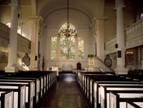
Christ Church in Philadelphia, worship home of George Washington and Ben Franklin.  (Photo by Robert Jones)

Baptists

Formed:

1609

Theology and practice:

Evangelical, evangelistic, typically Calvinist, eschatological (usually premillenialist)

Baptism:

Beliver’s, immersion

Sacraments:

Baptism and Communion

Form of government:

Decentralized

Worship:

Non-Liturgical

Famous members:

Warren G. Harding, Harry S. Truman, Jimmy Carter, William Jefferson Clinton, Hillary Clinton


“The true constitution of the Church is of a new creature baptized into the Father, the Son, and the Holy Ghost: The false constitution is of infants baptized: we profess therefore that all those Churches that baptize infants are of the same false constitution: and all those Churches that baptize the new creature, those that are made Disciples by teaching, men confessing their faith and their sins, are of one true constitution...” – John Smyth, “The Character of the Beast”, 1609 (The Baptists: A People Who Gathered "To Walk in All His Ways.": Christian History, Issue 6, (Carol Stream, IL: Christianity Today, Inc.) 1997)


The Baptist movement grew out of the Puritan/Separatist movements in England in the 17th century.  The Puritans, generally Calvinists, wanted the Church of England to be more democratic in its governmental structure, and less Catholic in its trappings, liturgy, and rituals.  (The Puritans were members of the Church of England, who wished to “purify” the church from within.)  The Separatists were more radical, desiring a complete break from the Church of England.  Out of the Separatist movement came both the Pilgrims and the Baptists.


The man often cited as the “first” Baptist is John Smyth (1570–1612), a former Anglican priest that became, in succession, a Puritan, a Separatist, and finally, a Baptist.  In 1608, John Smyth (with the help of Thomas Helwys (?–1616)) took a group of Separatist followers to Amsterdam.  During this period, Mennonites, descendents of the 16th century Anabaptists influenced Smyth and his followers.


In 1609, in a scene somewhat reminiscent of the Anabaptist “re-baptizing” ceremony in Zurich 90 years before, Smyth re-baptized himself and 40 followers, reasoning that their baptism as infants were invalid.  What was soon to become the Baptist Church had begun.


In 1644, a group of Calvinist Particular Baptists published their “London Confession”, affirming believer’s baptism as a key tenet: 


Baptism is an ordinance of the New Testament, given by Christ, to be dispersed only upon persons professing faith. The way and manner of dispensing this Ordinance the Scripture holds to be dipping or plunging the whole body under water.” - "The London Confession (1644)" (The Baptists: A People Who Gathered "To Walk in All His Ways.” Christian History, Issue 6)


There are approximately 32 million Baptists in the United States today

Key Events


Date

Events

1608

John Smyth takes a group of Separatist followers to Amsterdam, and is greatly influenced by Mennonites he finds there

1609

Smyth re-baptizes himself and 40 followers

1612

Death of John Smyth

1638

Calvinist Particular Baptist Church founded in England

1639

Separatist minister Roger Williams establishes a Baptist church in Providence, Rhode Island

1641

John Clarke establishes a Baptist church in Newport, RI

1644

Calvinist Particular Baptists publish their “London Confession”, affirming believer’s baptism as a key tenet

1689

Philadelphia Confession written by Baptist Churches in London

18th century

·         George Whitfield preaches doctrine of free will in the Americas

·         Split among Baptists into “Old Lights” (rationalists) and “New Lights” (more focused on the impact of the Holy Spirit and emotionalism)

·         Black Baptist churches begin to be formed in the South

1793

73,471 Baptists in the U.S., 25% of them Black[4]

1814

General Missionary Convention of the Baptist Denomination in the United States of America for Foreign Missions

1832

New Hampshire State Baptist Convention writes a confession

1836

Providence Baptist Association of Ohio – first organized Black group

1845

Southern Baptist Convention formed

1895

National Baptist Convention of Americas formed, consolidating various Black Baptist groups

1905

Baptist World Alliance formed

1961

Progressive National Baptist Convention of Americas formed

1994

32 million Baptists in 27 denominations in the U.S.[5]

2000

Southern Baptist Convention upholds its long-standing prohibition on female pastors

2005

Lynn Swanson Fowler ordained as a Music Minister at First Baptist Church in Marietta, GA

Lutherans

Formed:

1517 (Luther and the 95 Theses) or 1530 (Augsburg Confession)

Theology and practice:

Evangelical (Luther wrote the book); Sola scriptura, Sola Gratia, Sola Fide, priesthood of believers

Baptism:

Adult and Children

Communion:

Body and blood of Christ are present "in, with, and under the forms" of bread and wine during communion

Sacraments:

Baptism and Communion

Form of government:

Centralized (local congregations vote for pastors)

Worship:

Liturgical

Famous members[6]:

Bach, Beethoven, Mendelssohn, Steve Jobs, Henry Melchoir Muhlenberg, Norman Schwarzkopf, Richard John Neuhaus, Edwin Meese III, William Rehnquist, Dag Hammarskold, Dr. Albert Schweitzer


While other groups that eventually became Protestants preceded Luther (Moravians, Waldensians), the Protestant Reformation as we know it today can reasonably be traced to the actions of an obscure Augustinian Monk named Martin Luther, who, in two acts of defiance, changed the face of Europe forever, both secularly, and in terms of Christianity.  The two events? – tacking his 95 theses to door of Wittenburg Castle in 1517, and his “Here I stand, I can do no other” response to the Emperor of the Holy Roman Empire in 1521.

Key Events