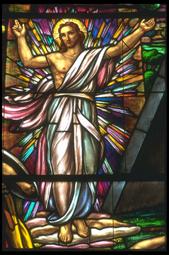
The Search for the Pre-Incarnate Christ in the Old Testament


Written by Robert Jones

robertcjones@mindspring.com

Click here to see other courses that I've written


Click here to go to the Christian History & Theology home page

Acworth, Georgia


This material may be reprinted free of charge for use by non-profit church groups, as long as the author and copyright information is retained. 

© 2007 Robert C. Jones


Would you like to teach this course? 

$25.00 - You can purchase a Teacher's Pack, containing:


  • A PowerPoint presentation outlining high points in the course (80 slides)
  • A 2 page Instructor's Guide (.doc and .pdf format), containing potential pitfalls in teaching the materials, answers to quiz questions, etc.
  • Course content in .pdf and .doc format

Click here to order via post

OR


Note: Clicking on the "Buy Now" button allows you to order via credit crad. You do not have to have a PayPal account.)


I'd love to hear about anyone that uses this material in their Sunday School classes!

robertcjones@mindspring.com

"Scripture taken from the HOLY BIBLE, NEW

INTERNATIONAL VERSION.  Copyright Ó 1973,

1978, 1984 by International Bible Society.  Used by

permission of Zondervan Publishing House."


Table of Contents

Table of Contents

Introduction

Quiz on “The Search for the Pre-Incarnate Christ in the Old Testament”

The New Testament foundation

The Old Testament

“The” Angel of the Lord

Melchizedek

Melchizedek in other ancient writings

Other potential appearances of Christ in the Old Testament

The Council of Nicaea

Summary

Sources

Notes

Other Christian History & Theology courses


Introduction

When one thinks about Jesus Christ, it is natural to picture the incarnate Christ of two thousands years ago – God made human, walking among the people of 1st century A.D. Israel.  However, Christian doctrine views that Christ is part of the Triune God, which means that Christ has always existed (he was not a created being).  So, if that is the case, one would expect to find traces of Christ in the Old Testament (certainly, God the Father and the “Spirit of God” are mentioned often in the Old Testament).


So, can Christ be found in the Old Testament?   The answer is probably yes, although we need to look for Christ in His role as a member of the Triune God – not as Jesus Christ of Nazareth.  It should be noted that I am not referring to Messianic prophecy in this course.  I cover that in my course, The Messiah – In the Old Testament, the Apocrypha, and the Dead Sea Scrolls.


I’m certainly not the first person to search for a pre-incarnate Christ in the Old Testament.  In this course, I quote Clement of Alexandria, St. Ambrose, St. John Chrysostom, John Calvin and John Wesley, all of whom discovered a pre-incarnate Christ in the Old Testament.


John Calvin, one of the founders of the Reformed Church

John Wesley, co-founder of the Methodists


Quiz on “The Search for the Pre-Incarnate Christ in the Old Testament”


1.                  T/F  In the New Testament, Christ never identifies himself as being divine

2.                  T/F  According to the New Testament, Christ is a priest forever in the order of Melchizedek

3.                  T/F  The Council of Nicaea convened in the 4th century to settle the question of the relationship of Christ to the Father

4.                  T/F  The Council of Nicaea was convened in 325 A.D. on the orders of the Emperor Maximus

5.                  T/F Some of the early church fathers equated Melchizedek with Christ

6.                  T/F  None of the Protestant reformers saw a pre-incarnate Christ in the Old Testament

7.                  T/F  The New Testament teaches us that God the Father can be seen by humans

8.                  T/F  4th century Presbyter Arius from Alexandria strongly believed in the doctrine of the Trinity

9.                  T/F  According to accepted Church doctrine, God the Father and Christ the Son are of the same substance

10.              T/F  One interpretation of the identity of the “commander of God’s army” in Joshua 5:13-6:2 is Moses

The New Testament foundation


Our starting point for discerning possible references to a pre-incarnate Christ in the Old Testament is what was said about Jesus Christ in the New Testament.


Reference

Notes

Colossians 1:15-20

“He is the image of the invisible God…”

Philippians 2:4-11

Christ “being in very nature God”

John 1:1-18

“In the beginning was the Word, and the Word was with God, and the Word was God.”

John 8:57-59

“Before Abraham was, I am”

Hebrews 6,7

Christ as a priest forever in the order of Melchizedek.


Colossians 1:15-19 gives us a wealth of information regarding the nature of the pre-incarnate Christ, including:


15He is the image of the invisible God, the firstborn over all creation. 16For by him all things were created: things in heaven and on earth, visible and invisible, whether thrones or powers or rulers or authorities; all things were created by him and for him. 17He is before all things, and in him all things hold together. 18And he is the head of the body, the church; he is the beginning and the firstborn from among the dead, so that in everything he might have the supremacy. 19For God was pleased to have all his fullness dwell in him, 20and through him to reconcile to himself all things, whether things on earth or things in heaven, by making peace through his blood, shed on the cross.  (Colossians 1:15-20)


John Calvin, in his Commentary on Colossians states that “God in himself…is invisible…he is revealed to us in Christ alone”.


…that God in himself, that is, in his naked majesty, is invisible, and that not to the eyes of the body merely, but also to the understandings of men, and that he is revealed to us in Christ alone, that we may behold him as in a mirror. For in Christ he shews us his righteousness, goodness, wisdom, power, in short, his entire self.  (Commentary on the Epistle to the Colossians by John Calvin[1])


A famous passage in Philippians tells us that Christ Jesus is “being in very nature God”:


5Your attitude should be the same as that of Christ Jesus:  6Who, being in very nature God, did not consider equality with God something to be grasped, 7but made himself nothing, taking the very nature of a servant, being made in human likeness.  8And being found in appearance as a man, he humbled himself and became obedient to death— even death on a cross!   9Therefore God exalted him to the highest place and gave him the name that is above every name, 10that at the name of Jesus every knee should bow, in heaven and on earth and under the earth, 11and every tongue confess that Jesus Christ is Lord, to the glory of God the Father. (Philippians 2:4-11)


The most important verses in the New Testament in terms of helping us search for a pre-incarnate Christ in the Old Testament are in the first chapter of the Gospel of John.  Of special interest in these passages:


1In the beginning was the Word, and the Word was with God, and the Word was God. 2He was with God in the beginning.


3Through him all things were made; without him nothing was made that has been made. 4In him was life, and that life was the light of men. 5The light shines in the darkness, but the darkness has not understood it…


14The Word became flesh and made his dwelling among us. We have seen his glory, the glory of the One and Only, who came from the Father, full of grace and truth.


15John testifies concerning him. He cries out, saying, "This was he of whom I said, 'He who comes after me has surpassed me because he was before me.'" 16From the fullness of his grace we have all received one blessing after another. 17For the law was given through Moses; grace and truth came through Jesus Christ. 18No one has ever seen God, but God the One and Only, who is at the Father's side, has made him known. (from John 1:1-18; emphasis added)


Note that every use of the appellation “Word” mentioned above is a translation of the Greek word logosLogos can also mean thought, reasoning, or Divine expression (see below).  So Jesus is the reasoning or Divine expression of God.


G3056

logos

log'-os

From G3004; something said (including the thought); by implication a topic (subject of discourse), also reasoning (the mental faculty) or motive; by extension a computation; specifically (with the article in John) the Divine Expression (that is, Christ):—account, cause, communication, X concerning, doctrine, fame, X have to do, intent, matter, mouth, preaching, question, reason, + reckon, remove, say (-ing), shew, X speaker, speech, talk, thing, + none of these things move me, tidings, treatise, utterance, word, work. (Strong’s Hebrew and Greek dictionaries by James Strong[2])


Also in the Gospel of John is an astonishing set of verses where Jesus identifies himself as the God of the Old Testament (compare with Exodus 3:2-6).


57You are not yet fifty years old," the Jews said to him, "and you have seen Abraham!" 58"I tell you the truth," Jesus answered, "before Abraham was born, I am!" 59At this, they picked up stones to stone him, but Jesus hid himself, slipping away from the temple grounds. (John 8:57-59)


Here Christ himself identifies that he is the God of the Old Testament, the one that answered “I am who I am” to Moses from the burning bush - prima facie evidence for Christ appearing in the Old Testament!


There is one more key set of verses in the New Testament germane to our discussion here – the references comparing Christ to Melchizedek in the book of Hebrews.  However, we’ll treat the Melchizedek question in its own section.


Using the New Testament as a guide for discovering a pre-incarnate Christ in the Old Testament, we might especially look for situations where God appears to humans in a human form (as Christ appeared to humans in an incarnate form 2,000 years ago).  One could also theoretically seek a pre-incarnate Christ when God speaks (but doesn’t appear) to humans in the Old Testament, since Christ is the “Word” of God.  However, in this course, I’ll generally focus on the former case, rather than the latter.

The Old Testament

“The” Angel of the Lord


There are several apparent places in the Old Testament where the Lord (Yahweh) himself, appearing in the form of an angel, seems to be speaking directly to a human (as opposed to using an angel as an intermediary).  Such passages often begin with "The Angel of the Lord..."


Many evangelical scholars (John Calvin among them) view that "The Angel of the Lord" could be a pre-incarnate Christ. 


The orthodox doctors of the Church have correctly and wisely expounded, that the Word of God was the supreme angel, who then began, as it were by anticipation, to perform the office of Mediator. For though he were not clothed with flesh, yet he descended as in an intermediate form, that he might have more familiar access to the faithful...I am rather inclined, however, to agree with ancient writers, that in those passages wherein it is stated that the angel of the Lord appeared to Abraham, Jacob, and Moses, Christ was that angel.  (John Calvin, Christian Institutes, p. 161,195[3])


Reference

Notes

Gen 16:7-13

The Lord talks to Hagar

Genesis 22:11-12

“Now I know that you fear God, because you have not withheld from me your son…”

Gen 22:15-18

An angel calls to Abraham from heaven

Exodus 3:2-14

Moses & the burning bush

Judges 2:1-3

"I brought you up out of Egypt..."

Judges 6:11-23

Gideon

Zechariah 3:1-10

"The LORD said to Satan..."


The first example in the Bible comes in Gen 16:7-13, when “the angel of the LORD” appears to Hagar.  Two clues that this might be the pre-incarnate Christ:


  1. The angel says, “I will so increase your descendants that they will be too numerous to count.” – something that only God could say.
  2. We are told that Hagar “gave this name to the LORD who spoke to her: ‘You are the God who sees me…’”


7The angel of the LORD found Hagar near a spring in the desert; it was the spring that is beside the road to Shur. 8And he said, "Hagar, servant of Sarai, where have you come from, and where are you going?"  "I’m running away from my mistress Sarai," she answered.


9Then the angel of the LORD told her, "Go back to your mistress and submit to her." 10The angel added, "I will so increase your descendants that they will be too numerous to count."


11The angel of the LORD also said to her:  "You are now with child    and you will have a son.  You shall name him Ishmael, for the LORD has heard of your misery.  12He will be a wild donkey of a man; his hand will be against everyone and everyone’s hand against him, and he will live in hostility toward all his brothers."


13She gave this name to the LORD who spoke to her: "You are the God who sees me," for she said, "I have now seen the One who sees me." (Gen 16:7-13)


In Genesis 22:11-12, “the angel of the LORD” appears to Abraham, and says “Now I know that you fear God, because you have not withheld from me your son…”


11But the angel of the LORD called out to him from heaven, "Abraham! Abraham!"  "Here I am," he replied.


"12Do not lay a hand on the boy," he said. "Do not do anything to him. Now I know that you fear God, because you have not withheld from me your son, your only son."  (Genesis 22:11-12, emphasis added)


Another example follows several verses later in Gen 22:15-18.  This time, the angel of the LORD calls to Abraham from heaven:


15The angel of the LORD called to Abraham from heaven a second time 16and said, "I swear by myself", declares the LORD, "that because you have done this and have not withheld your son, your only son, 17I will surely bless you and make your descendants as numerous as the stars in the sky and as the sand on the seashore. Your descendants will take possession of the cities of their enemies, 18and through your offspring all nations on earth will be blessed, because you have obeyed me." (Gen 22:15-18)


John Wesley explicitly links this appearance of the angel of the LORD with Christ:


And the Angel — Christ. Called unto Abraham — Probably while the ram was yet burning. Very high expressions are here of God’s favor to Abraham, above any he had yet been blessed with. (John Wesley’s Notes On The Whole Bible: The Old Testament, Genesis 22[4])


In Exodus 3:2-6, we have perhaps the most famous example of God talking to a human, in the incident of Moses and the burning bush.  We almost reflexively assume that this is God the Father talking, yet, the passage starts out with “”There the angel of the LORD appeared to him.  And remember, in the New Testament, Jesus said “Before Abraham was, I AM” (John 8: 57-59)


2There the angel of the LORD appeared to him in flames of fire from within a bush. Moses saw that though the bush was on fire it did not burn up. 3So Moses thought, "I will go over and see this strange sight—why the bush does not burn up."


4When the LORD saw that he had gone over to look, God called to him from within the bush, "Moses! Moses!"  And Moses said, "Here I am."


"5Do not come any closer," God said. "Take off your sandals, for the place where you are standing is holy ground." 6Then he said, "I am the God of your father, the God of Abraham, the God of Isaac and the God of Jacob." At this, Moses hid his face, because he was afraid to look at God.  (Exodus 3:2-6)


13Moses said to God, “Suppose I go to the Israelites and say to them, ‘The God of your fathers has sent me to you,’ and they ask me, ‘What is his name?’ Then what shall I tell them?"  14God said to Moses, "I AM WHO I AM. This is what you are to say to the Israelites: I AM has sent me to you."  (Exodus 3:13-14)


In Judges 2:1-2, “the angel of the LORD” states “I brought you up out of Egypt…”, indicating it was God speaking.


1The angel of the LORD went up from Gilgal to Bokim and said, “I brought you up out of Egypt and led you into the land that I swore to give to your forefathers. I said, 'I will never break my covenant with you, 2and you shall not make a covenant with the people of this land, but you shall break down their altars.’ Yet you have disobeyed me. Why have you done this?"  (Judges 2:1-2)


John Wesley explicitly identifies the angel as Christ:


The angel — Christ the angel of the covenant, often called the angel of the Lord, to whom the conduct of Israel out of Egypt into Canaan, is frequently ascribed. He alone could speak the following words in his own name and person; whereas created angels and prophets universally usher in their message with, Thus saith the Lord, or some equivalent expression. And this angel having assumed the shape of a man, it is not strange that he imitates the motion of a man... (John Wesley’s Notes On The Whole Bible: The Old Testament, Judges 2[5])


In Judges 6:11-23, Gideon speaks to “the angel of the LORD”, who is clearly God speaking.  Again since we are told elsewhere that God the Father is invisible to humans, we might assume that Gideon is speaking to a pre-incarnate Christ.  This is further backed by the end of these passages.  When Gideon realizes to whom he has been talking, he is afraid he is going to die – “Ah, Sovereign LORD! I have seen the angel of the LORD face to face!”  However, humans can talk to Christ face-to-face with no ill effects!


11The angel of the LORD came and sat down under the oak in Ophrah that belonged to Joash the Abiezrite, where his son Gideon was threshing wheat in a winepress to keep it from the Midianites.  12When the angel of the LORD appeared to Gideon, he said, "The LORD is with you, mighty warrior."


"13But sir," Gideon replied, "if the LORD is with us, why has all this happened to us? Where are all his wonders that our fathers told us about when they said, ‘Did not the LORD bring us up out of Egypt?’ But now the LORD has abandoned us and put us into the hand of Midian.”


14The LORD turned to him and said, "Go in the strength you have and save Israel out of Midian’s hand. Am I not sending you?"  15"But Lord", Gideon asked, "how can I save Israel? My clan is the weakest in Manasseh, and I am the least in my family".


16The LORD answered, "I will be with you, and you will strike down all the Midianites together."  17Gideon replied, "If now I have found favor in your eyes, give me a sign that it is really you talking to me.  18Please do not go away until I come back and bring my offering and set it before you."  And the LORD said, "I will wait until you return".


19Gideon went in, prepared a young goat, and from an ephah of flour he made bread without yeast. Putting the meat in a basket and its broth in a pot, he brought them out and offered them to him under the oak.


20The angel of God said to him, "Take the meat and the unleavened bread, place them on this rock, and pour out the broth". And Gideon did so. 21With the tip of the staff that was in his hand, the angel of the LORD touched the meat and the unleavened bread. Fire flared from the rock, consuming the meat and the bread. And the angel of the LORD disappeared. 22When Gideon realized that it was the angel of the LORD, he exclaimed, "Ah, Sovereign LORD! I have seen the angel of the LORD face to face!"


23But the LORD said to him, "Peace! Do not be afraid. You are not going to die."  (Judges 6:11-23)


Our final example comes much later in the Bible, in Zechariah 3:1-10, when “the angel of the LORD” rebukes Satan.  Notice in the last two verses, it is no longer “the angel of the LORD talking”, but the LORD (or, a pre-incarnate Christ).


1Then he showed me Joshua the high priest standing before the angel of the LORD, and Satan standing at his right side to accuse him. 2The LORD said to Satan, ‘The LORD rebuke you, Satan! The LORD, who has chosen Jerusalem, rebuke you! Is not this man a burning stick snatched from the fire?’


3Now Joshua was dressed in filthy clothes as he stood before the angel. 4The angel said to those who were standing before him, "Take off his filthy clothes."  Then he said to Joshua, "See, I have taken away your sin, and I will put rich garments on you."


5Then I said, "Put a clean turban on his head." So they put a clean turban on his head and clothed him, while the angel of the LORD stood by. 


6The angel of the LORD gave this charge to Joshua: 7 “This is what the LORD Almighty says: ‘If you will walk in my ways and keep my requirements, then you will govern my house and have charge of my courts, and I will give you a place among these standing here.


8Listen, O high priest Joshua and your associates seated before you, who are men symbolic of things to come: I am going to bring my servant, the Branch. 9See, the stone I have set in front of Joshua! There are seven eyes on that one stone, and I will engrave an inscription on it,’ says the LORD Almighty, ‘and I will remove the sin of this land in a single day.’


10In that day each of you will invite his neighbor to sit under his vine and fig tree,’ declares the LORD Almighty.”  (Zechariah 3:1-10)


John Wesley equates this appearance of “the angel of the LORD” with Christ, in His role as a Mediator:


1. And he — The Lord represented to me in a vision. Standing — Ministering in his office. The angel — Christ. 2. The Lord — Christ, as a mediator, rather chooses to rebuke him in his father’s name, than in his own. Is not this — Joshua. 3. With filthy garments — The emblem of a poor or sinful state. The angel — Christ. 4. And he — Christ. Unto those — Ministerial angels. I have caused — What angels could not take away, Christ did; he removed the filth of sin, the guilt and stain of it. With change of raiment — Clean and rich, the emblem of holiness. 5. I said — Zechariah takes the boldness to desire that for Joshua, which might add to his authority, and he asks the thing of Christ. A fair mitre — The proper ornament for the head of the high-priest. With garments — All the garments which appertained to the high priest. The angel — Christ. (John Wesley’s Notes on the Whole Bible: The Old Testament, Zechariah 3[6])

Melchizedek

If catechumens understand not something, let them lay aside sloth, and hasten unto knowledge. It is not therefore needful for me to disclose mysteries here: let the Scriptures intimate to you what is the Priesthood after the order of Melchizedec. (St. Augustin on the Psalms, p. 1171[7])


Perhaps the most controversial topic in our search for the pre-incarnate Christ in the Old Testament is the possible identification of the mysterious Melchizedek with Christ.  Calvin called such an identification “foolish”; Wesley agreed that several of the church fathers asserted this, but took no stand himself; and Early Church Fathers Clement of Alexandria, St. Ambrose and St. John Chrysostom all (with varying degrees of vociferousness) identified Melchizedek as a pre-incarnate Christ.


Many Christian writers have thought that this was an appearance of the Son of God himself, our Lord Jesus, known to Abram at this time by this name. But as nothing is expressly revealed concerning it, we can determine nothing.  (John Wesley, John Wesley's Notes on the Whole Bible: The Old Testament, p. 88[8])


Reference

Notes

Gen 14:18-20

Melchizedek meets Abraham

Psalms 110:1-4

"You are a priest forever..."

Heb 5:6,10; 6:20

Christ as the high priest

Heb 7:1-17

"Even the patriarch Abraham gave him a tenth of the plunder!"


Certainly the Scriptures go to great length to show the similarities between Melchizedek and Christ, and Melchizedek seems to have many attributes that one would normally only associate with the triune God:


The first reference in the Bible to Melchizedek is in Genesis 14:18-20, when Melchizedek meets Abraham after the latter defeated “Kedorlaomer and the kings allied with him”.  The reference is only three verses, but it is potentially explosive, as Melchizedek’s actions and words seem only appropriate for God to say or do.


18Then Melchizedek king of Salem brought out bread and wine. He was priest of God Most High, 19and he blessed Abram, saying, “Blessed be Abram by God Most High, Creator of heaven and earth. 20 And blessed be God Most High, who delivered your enemies into your hand.”  Then Abram gave him a tenth of everything.  (Genesis 14:18-20)


The second (and final) reference in the Old Testament to Melchizedek is in Psalms 110:4, in the middle of a series of verses that most Christians believe are Messianic prophecies about the coming Jesus:


4 The LORD has sworn and will not change his mind:  "You are a priest forever, in the order of Melchizedek." (Psalms 110:4)


The most expansive discussion regarding Melchizedek in the Bible occurs in the New Testament book of Hebrews.  The author of Hebrews (perhaps Paul) goes to great lengths to compare Jesus and Melchizedek, but stops short of actually saying Melchizedek was a pre-incarnate Jesus.  The main point of the author of Hebrews seems to be to prove to a Jewish audience that Christ was both king and High Priest, but not high priest in the sense of the Levitical priesthood, but rather in a much earlier priesthood.


4No one takes this honor upon himself; he must be called by God, just as Aaron was. 5So Christ also did not take upon himself the glory of becoming a high priest. But God said to him, "You are my Son;  today I have become your Father." 6And he says in another place, "You are a priest forever, in the order of Melchizedek."


7During the days of Jesus' life on earth, he offered up prayers and petitions with loud cries and tears to the one who could save him from death, and he was heard because of his reverent submission. 8Although he was a son, he learned obedience from what he suffered 9and, once made perfect, he became the source of eternal salvation for all who obey him 10and was designated by God to be high priest in the order of Melchizedek. (Hebrews 5:1-10)


16Men swear by someone greater than themselves, and the oath confirms what is said and puts an end to all argument. 17Because God wanted to make the unchanging nature of his purpose very clear to the heirs of what was promised, he confirmed it with an oath. 18God did this so that, by two unchangeable things in which it is impossible for God to lie, we who have fled to take hold of the hope offered to us may be greatly encouraged. 19We have this hope as an anchor for the soul, firm and secure. It enters the inner sanctuary behind the curtain, 20where Jesus, who went before us, has entered on our behalf. He has become a high priest forever, in the order of Melchizedek. (Hebrews 6:16-20)


1This Melchizedek was king of Salem and priest of God Most High. He met Abraham returning from the defeat of the kings and blessed him, 2and Abraham gave him a tenth of everything. First, his name means "king of righteousness"; then also, "king of Salem" means "king of peace." 3Without father or mother, without genealogy, without beginning of days or end of life, like the Son of God he remains a priest forever.


4Just think how great he was: Even the patriarch Abraham gave him a tenth of the plunder! 5Now the law requires the descendants of Levi who become priests to collect a tenth from the people—that is, their brothers—even though their brothers are descended from Abraham. 6This man, however, did not trace his descent from Levi, yet he collected a tenth from Abraham and blessed him who had the promises. 7And without doubt the lesser person is blessed by the greater. 8In the one case, the tenth is collected by men who die; but in the other case, by him who is declared to be living. 9One might even say that Levi, who collects the tenth, paid the tenth through Abraham, 10because when Melchizedek met Abraham, Levi was still in the body of his ancestor.


11If perfection could have been attained through the Levitical priesthood (for on the basis of it the law was given to the people), why was there still need for another priest to come—one in the order of Melchizedek, not in the order of Aaron? 12For when there is a change of the priesthood, there must also be a change of the law. 13He of whom these things are said belonged to a different tribe, and no one from that tribe has ever served at the altar. 14For it is clear that our Lord descended from Judah, and in regard to that tribe Moses said nothing about priests. 15And what we have said is even more clear if another priest like Melchizedek appears, 16one who has become a priest not on the basis of a regulation as to his ancestry but on the basis of the power of an indestructible life. 17For it is declared:    "You are a priest forever, in the order of Melchizedek." (Hebrews 7:1-17, emphasis added)


So, who was (is) this mysterious priest/king named Melchizedek?  Some people identify him as Shem, others as a Canaanite deity or king.  But various commentaries and several of the early church fathers identified him as a pre-incarnate Christ.


St. Ambrose (c. 340 - 397 A.D.), the bishop who baptized St. Augustine, strongly believed that Melchizedek was indeed “begotten of God the Father, of one substance with the Father; without a father according to His Incarnation”:


45. The lesson of Genesis just read shows that they are more ancient, for the synagogue took its origin from the law of Moses. But Abraham was far earlier, who, after conquering the enemy, and recovering his own nephew, as he was enjoying his victory, was met by Melchisedech, who brought forth those things which Abraham reverently received. It was not Abraham who brought them forth, but Melchisedech, who is introduced without father, without mother, having neither beginning of days, nor ending, but like the Son of God, of Whom Paul says to the Hebrews: “that He remaineth a priest for ever,” Who in the Latin version is called King of righteousness and King of peace. 46. Do you recognize Who that is? Can a man be king of righteousness, when himself he can hardly be righteous? Can he be king of peace, when he can hardly be peaceable? He it is Who is without mother according to His Godhead, for He was begotten of God the Father, of one substance with the Father; without a father according to His Incarnation, for He was born of a Virgin; having neither beginning nor end, for He is the beginning and end of all things, the first and the last. The sacrament, then, which you received is the gift not of man but of God; brought forth by Him Who blessed Abraham the father of faith, whose grace and deeds we admire.  (The Principal Works of St. Ambrose, Concerning the Mysteries, Chapter 8, p. 647, emphasis added[9])


Clement of Alexandria (died c. 215 A.D.) made a similar equation between Christ and Melchizedek:


But our Savior surpasses all human nature…What need is there to say that He is the only High Priest, who alone possesses the knowledge of the worship of God? He is Melchizedek, "King of peace," the most fit of all to head the race of men. A legislator too, inasmuch as He gave the law by the mouth of the prophets, enjoining and teaching most distinctly what things are to be done, and what not. Who of nobler lineage than He whose only Father is God? (Stromata, Clement of Alexandria, Book 2, Chapter 5, p. 693, emphasis added[10])


For Salem is, by interpretation, peace; of which our Savior is enrolled King, as Moses says, Melchizedek king of Salem, priest of the most high God, who gave bread and wine, furnishing consecrated food for a type of the Eucharist. And Melchizedek is interpreted "righteous king;" and the name is a synonym for righteousness and peace. (Stromata, Clement of Alexandria, Book 4, Chapter 25, p. 873[11])


St. John Chrysostom (347 A.D. – 407 A.D.), Patriarch Of Constantinople and the greatest preacher of his day states, “What man is ‘King of Righteousness and of Peace’? None, save only our Lord JESUS Christ.”


And first from the name. "First" (he says) "being by interpretation King of righteousness": for Sedec means "righteousness"; and Melchi, "King": Melchisedec, "King of righteousness." Seest thou his exactness even in the names? But who is "King of righteousness," save our Lord Jesus Christ? "King of righteousness". And after that also "King of Salem," from his city, that is, "King of Peace,’ which again is [characteristic] of Christ. For He has made us righteous, and has "made peace" for "things in Heaven and things on earth." (Colossians 1:20) What man is "King of Righteousness and of Peace"? None, save only our Lord JESUS Christ. (The Homilies Of St. John Chrysostom, Archbishop Of Constantinople, On The Epistle To The Hebrews, p. 912, emphasis added[12])

Melchizedek in other ancient writings

One of the Dead Sea Scrolls, named The Heavenly Prince Melchizedek (11Q13), would seem to add to the idea of Melchizedek being a divine being, actually referring to Melchizedek as Elohim, one of the terms used in the Hebrew Bible to refer to God.  Note that letters in [ ] are extrapolated by the translator.  The translation “godlike being” is translating the Hebrew word ElohimBelial refers to Satan.


For this is the time decreed for "the year of Melchiz[edek]’s favor", [and] by his might he w[i]ll judge God’s Holy Ones and so establish a righteous ki[n]gdom, as is written about him in the Psalm of David, ‘A godlike being has taken his place in the divine council; in the midst of the divine beings he holds judgment…the true import applies to Belial and the spirits predestined to him, becau[se all of them have reb]elled, turn[ing] from God’s precepts [and so becoming utterly wicked].  Therefore Melchizedek will thoroughly prosecute the veng[ea]nce required by Go[d’s] statu[te]s.  [Also, he will deliver all the captives from the power of [B]elial, and from the power of all [the spirits predestined to him].  Allied with him will be all the ["righteous] divine beings."  (The Heavenly Prince Melchizedek, emphasis added[13])


Geza Vermes, author of The Complete Dead Sea Scrolls in English, equates Melchizedek in this scroll with Michael the Archangel.  However, it seems doubtful that ancient Jews would have referred to an angel as God.


Melchizedek is also mentioned in a 2nd century Gnostic text named simply Melchizedek.  The text was among the Gnostic works discovered at Nag Hammadi in the 1940s.  Note that I in no way am suggesting that a Gnostic text has any divine authority to impart.  I include it only to show that there were early Christian traditions linking Melchizedek and Christ as one and the same.


And the Savior will reveal to them the world that gives life to the All...which will happen in his name. Furthermore, they will say of him that he is unbegotten, though he has been begotten, (that) he does not eat, even though he eats, (that) he does not drink, even though he drinks, (that) he is uncircumcised, though he has been circumcised, (that) he is unfleshly, though he has come in the flesh, (that) he did not come to suffering, <though> he came to suffering, (that) he did not rise from the dead, <though> he arose from the dead.


But all the tribes and all the peoples will speak the truth who are receiving from you yourself, O Melchizedek, Holy One, High-Priest, the perfect hope and the gifts of life…  (Melchizedek[14])

Other potential appearances of Christ in the Old Testament

Reference

Notes

Genesis 1:1-2

“And God said, ‘Let there be light,’ and there was light.”

Genesis 18

The three visitors; the Lord speaks to Abraham

Genesis 32: 24-30

“It is because I saw God face to face, and yet my life was spared.”

Joshua 5:13-6:2

Commander of the Army of God (see also Rev 19:11-16)

Daniel 3: 19-29

“Look! I see four men walking around in the fire, unbound and unharmed, and the fourth looks like a son of the gods.”


Some scholars view that Christ appears in the first chapter of the first book of the Bible – Genesis.  Calvin in his liner notes for the Geneva Bible thought so.  The verse in question is Genesis 1:3, which God states “And God said, ‘Let there be light,’ and there was light.”  Here, God spoke, and John identifies that the pre-incarnate Christ is the logos or Word of God.  There is also the connection of God speaking with the creation of light, which appears in the first chapter of the Gospel of John, also.


1In the beginning God created the heavens and the earth. 2Now the earth was formless and empty, darkness was over the surface of the deep, and the Spirit of God was hovering over the waters.  3And God said, "Let there be light,’ and there was light."  (Genesis 1:1-3)


Genesis 18 features numerous examples of the LORD speaking directly to Abraham.  It starts with an explicit mention of the fact that “The LORD appeared to Abraham” in the form of “three men standing nearby”.  One could surmise that one or all of the “three men” were the pre-incarnate Christ, appearing to a human.

1The LORD appeared to Abraham near the great trees of Mamre while he was sitting at the entrance to his tent in the heat of the day. 2Abraham looked up and saw three men standing nearby. When he saw them, he hurried from the entrance of his tent to meet them and bowed low to the ground.” (Genesis 18: 1-2)


John Calvin in his Commentary on Genesis explicitly linked this appearance of the Lord to a human with Christ.  John Wesley seems to come very close to making this linkage in his Notes On The Whole Bible: The Old Testament.


Again, whenever he manifested himself to the fathers, Christ was the Mediator between him and them; who not only personates God in proclaiming his word, but is also truly and essentially God. (Commentary on Genesis by John Calvin[15])


This appearance of God to Abraham seems to have had in it more of freedom and familiarity, and less of grandeur and majesty, than those we have hitherto read of, and therefore more resembles that great visit which in the fulness of time the Son of God was to make to the world. He sat in the tent-door in the heat of the day — Not so much to repose himself, as to seek an opportunity of doing good, by giving entertainment to strangers. 2. And lo three men — These three men were three spiritual heavenly beings, now assuming human shapes, that they might be visible to Abraham, and conversable with him. Some think they were all three created angels; others, that one of them was the Son of God. (John Wesley’s Notes on the Whole Bible: The Old Testament, Genesis 18[16])


In Genesis 32: 24-30, Jacob wrestles with a man that turns out to be God.  While Calvin refers to this as a vision, there is no reason to think that it wasn’t an actual literal incident.  Like Gideon, Jacob is astonished that “…I saw God face to face, and yet my life was spared.”  Again, assuming that Father God can’t be seen be humans, a case could be made that this is the pre-incarnate Christ.


24So Jacob was left alone, and a man wrestled with him till daybreak. 25When the man saw that he could not overpower him, he touched the socket of Jacob’s hip so that his hip was wrenched as he wrestled with the man. 26Then the man said, "Let me go, for it is daybreak."


But Jacob replied, "I will not let you go unless you bless me."


27The man asked him, "What is your name?"


"Jacob," he answered.


28Then the man said, "Your name will no longer be Jacob, but Israel, because you have struggled with God and with men and have overcome."


29Jacob said, "Please tell me your name."


But he replied, "Why do you ask my name?" Then he blessed him there.


30So Jacob called the place Peniel, saying, "It is because I saw God face to face, and yet my life was spared."  (Genesis 32: 24-30)


Joshua 5:13-6:2 is an interesting set of verses, since it refers to “The commander of the LORD’S army” as speaking to Joshua.  This has interesting parallels to Revelation 19:11-16, which describes the Second Coming of Jesus Christ (and may refer to the battle of Armageddon). 


It could be argued that the 2nd verse of Joshua 6 (which starts “Then the LORD said to Joshua”) is not connected to the appearance of the commander of the Lord’s army – after all, it is in a new chapter, and Joshua 6:1 appears to start a new topic.  However, remember that chapter and verse designations in the Bible were a Medieval invention, and Joshua 6:1 can simply be referring to the reason the commander of God’s army was talking to Joshua in the first place. 


An alternative interpretation is that the commander of God’s army is Michael the Archangel, but Michael the Archangel is certainly not the commander in Revelation 19:11-16.


13Now when Joshua was near Jericho, he looked up and saw a man standing in front of him with a drawn sword in his hand. Joshua went up to him and asked, "Are you for us or for our enemies?"


"14Neither," he replied, "but as commander of the army of the LORD I have now come." Then Joshua fell facedown to the ground in reverence, and asked him, "What message does my Lord have for his servant?"


15The commander of the LORD’S army replied, "Take off your sandals, for the place where you are standing is holy." And Joshua did so.


1Now Jericho was tightly shut up because of the Israelites. No one went out and no one came in.


2Then the LORD said to Joshua, "See, I have delivered Jericho into your hands, along with its king and its fighting men."  (Joshua 5:13-6:2)


Both John Calvin and John Wesley equated the commander of God’s army with Christ:


We have said that in the books of Moses the name of Jehovah is often attributed to the presiding Angel, who was undoubtedly the only-begotten Son of God. He is indeed very God, and yet in the person of Mediator by dispensation, he is inferior to God. I willingly receive what ancient writers teach on this subject, — that when Christ anciently appeared in human form, it was a prelude to the mystery which was afterwards exhibited when God was manifested in the flesh. We must beware, however, of imagining that Christ at that time became incarnate, since, first, we nowhere read that God sent his Son in the flesh before the fullness of the times; and, secondly, Christ, in so far as he was a man, behooved to be the Son of David. But as is said in Ezekiel, (Ezekiel 1) it was only a likeness of man. Whether it was a substantial body or an outward form, it is needless to discuss, as it seems wrong to insist on any particular view of the subject. (Commentary on Joshua, John Calvin, Joshua 5[17])


14. As captain — I am the chief captain of this people, and will conduct and assist thee and them in this great undertaking. Now this person is not a created angel, but the son of God, who went along with the Israelites in this expedition, as their chief and captain. And this appears, 1. By his acceptance of adoration here, which a created angel durst not admit of, Revelation 22:8, 9. 2. Because the place was made holy by his presence, Joshua 5:15, which was God’s prerogative, Exodus 3:5. 3. Because he is called the Lord, Hebrews. Jehovah, Joshua 6:2. My Lord — I acknowledge thee for my Lord and captain, and therefore wait for thy commands, which I am ready to obey. (John Wesley’s Notes On The Whole Bible: The Old Testament, Joshua 5)


Perhaps the most stunning potential appearance of Christ in the Old Testament appears in Daniel 3, in the story of Shadrach, Meshach and Abednego.  After being thrown into a fiery furnace by Nebuchadnezzar, Shadrach, Meshach and Abednego are saved by a mysterious stranger who is described as “like a son of the gods”.  Of course, Jesus is referred to often in the New Testament as the Son of God. 


19Then Nebuchadnezzar was furious with Shadrach, Meshach and Abednego, and his attitude toward them changed. He ordered the furnace heated seven times hotter than usual 20and commanded some of the strongest soldiers in his army to tie up Shadrach, Meshach and Abednego and throw them into the blazing furnace. 21So these men, wearing their robes, trousers, turbans and other clothes, were bound and thrown into the blazing furnace. 22The king’s command was so urgent and the furnace so hot that the flames of the fire killed the soldiers who took up Shadrach, Meshach and Abednego, 23and these three men, firmly tied, fell into the blazing furnace.


24Then King Nebuchadnezzar leaped to his feet in amazement and asked his advisers, "Weren’t there three men that we tied up and threw into the fire?"  They replied, "Certainly, O king."


25He said, "Look! I see four men walking around in the fire, unbound and unharmed, and the fourth looks like a son of the gods."  (Daniel 3: 19-29, emphasis added)


Calvin didn’t think the mysterious stranger was Christ – he thought it was an angel.  Wesley, however, strongly associated the stranger with Christ.


Jesus Christ, the Angel of the covenant, did sometimes appear before his incarnation. Those who suffer for Christ, have his gracious presence with them in their sufferings, even in the fiery furnace, even in the valley of the shadow of death, and therefore need fear no evil. (John Wesley’s Notes on the Whole Bible: The Old Testament, on Daniel 3[18])

The Council of Nicaea

St. Athanasius, who argued successfully against the views of Arius


Unless one believes in a Trinitarian God, the concept of placing a pre-incarnate Christ in the role of “God” or “LORD” in the Old Testament could seem blasphemous.  While the New Testament verses quoted at the beginning of this course (especially John 1:1-18, and Colossians 1:15-19) would seem to provide adequate backing for the theological concept that “Jesus is Lord”, I’ll also add a look at official Christian doctrine on the topic, in the form of the Nicene Creed, created at the Council of Nicaea in 325 A.D.


The Council of Nicaea was called by the Emperor Constantine in 325 A.D. to settle the question of the relationship of Jesus to the Father.  Some church officials, such as a presbyter in Alexandria named Arius (c. 250 - 336 A.D.) argued that Jesus was divine, but on a lower level then the Father.  Arius started with this premise:


One God, alone unbegotten, alone everlasting, alone unbegun, alone true, alone having immortality, alone wise, alone good, alone sovereign.


From this starting point, Arius ended up with the view that Christ was an intermediary distinct from the Father (or that there was a difference of substance (homoiousia), or essential being between the Father and the Son.)


On the other side of the issue was a young deacon named Athanasius, (c. 296 - 373 A.D.) who would later become Bishop of Alexandria.  Athanasius argued that the Word (John 1:1-18) became man - the Word did not come into a man.  Thus, Christ is fully God.


This debate was causing dissension in the Empire, as Eusebius notes in his Life of Constantine.


For in fact, in every city bishops were engaged in obstinate conflict with bishops, and people rising against people; and almost like the fabled Symplegades [two rocks that clash together randomly in Greek mythology], coming into violent collision with each other. Nay, some were so far transported beyond the bounds of reason as to be guilty of reckless and outrageous conduct, and even to insult the statues of the emperor. (Life of Constantine, Chapter 4, Eusebius[19])


The Council was the first Church council convened since the Jerusalem Council of c. 49 A.D.  Constantine encouraged attendance by offering to pay the travel expenses of the bishops:


THEN as if to bring a divine array against this enemy, he convoked a general council, and invited the speedy attendance of bishops from all quarters, in letters expressive of the honorable estimation in which he held them. Nor was this merely the issuing of a bare command but the emperor’s good will contributed much to its being carried into effect: for he allowed some the use of the public means of conveyance, while he afforded to others an ample supply of horses for their transport. The place, too, selected for the synod, the city Nicaea in Bithynia (named from "Victory"), was appropriate to the occasion. As soon then as the imperial injunction was generally made known, all with the utmost willingness hastened thither, as though they would outstrip one another in a race; for they were impelled by the anticipation of a happy result to the conference, by the hope of enjoying present peace, and the desire of beholding something new and strange in the person of so admirable an emperor.  (Life of Constantine, Chapter 4, Eusebius[20])


Estimates vary on how many bishops attended the famous Council.  Eusebius said greater than 250, while Athanasius identified 318.  However many bishops were present, there were many more priests and presbyters present in their retinues.  The vast majority of the attendees were from the Eastern (Greek-speaking) Empire, but several Latin bishops attended, plus two representatives from Pope Sylvester (who did not attend because of ill-health).  Eusebius comments on the origins of the bishops that attended:


IN effect, the most distinguished of God’s ministers from all the churches which abounded in Europe, Lybia, and Asia were here assembled. And a single house of prayer, as though divinely enlarged, sufficed to contain at once Syrians and Cilicians, Phoenicians and Arabians, delegates from Palestine, and others from Egypt; Thebans and Libyans, with those who came from the region of Mesopotamia. A Persian bishop too was present at this conference, nor was even a Scythian found wanting to the number. Pontus, Galatia, and Pamphylia, Cappadocia, Asia, and Phrygia, furnished their most distinguished prelates; while those who dwelt in the remotest districts of Thrace and Macedonia, of Achaia and Epirus, were notwithstanding in attendance. Even from Spain itself, one whose fame was widely spread took his seat as an individual in the great assembly. The prelate of the imperial city was prevented from attending by extreme old age; but his presbyters were present, and supplied his place. (Life of Constantine, Chapter 7, Eusebius[21])


…but in the present company, the number of bishops exceeded two hundred and fifty, while that of the presbyters and deacons in their train, and the crowd of acolytes and other attendants was altogether beyond computation. (Life of Constantine, Chapter 8, Eusebius[22])


Eusebius describes the opening of the great Council, which occurred in either May or June of 325 A.D.  Constantine himself signaled the opening of the Council:


NOW when the appointed day arrived on which the council met for the final solution of the questions in dispute, each member was present for this in the central building of the palace, which appeared to exceed the rest in magnitude. On each side of the interior of this were many seats disposed in order, which were occupied by those who had been invited to attend, according to their rank. As soon, then, as the whole assembly had seated themselves with becoming orderliness, a general silence prevailed, in expectation of the emperor’s arrival…And now, all rising at the signal which indicated the emperor’s entrance, at last he himself proceeded through the midst of the assembly, like some heavenly messenger of God, clothed in raiment which glittered as it were with rays of light, reflecting the glowing radiance of a purple robe, and adorned with the brilliant splendor of gold and precious stones…As soon as he had advanced to the upper end of the seats, at first he remained standing, and when a low chair of wrought gold had been set for him, he waited until the bishops had beckoned to him, and then sat down, and after him the whole assembly did the same. (Life of Constantine, Chapter 10, Eusebius[23])


After an opening address by Bishop Eusebius, Emperor Constantine addressed the room full of dignitaries as to his purpose for convening the Council:


…I pray therefore that no malignant adversary may henceforth interfere to mar our happy state; I pray that, now the impious hostility of the tyrants has been forever removed by the power of God our Savior, that spirit who delights in evil may devise no other means for exposing the divine law to blasphemous calumny; for, in my judgment, intestine strife within the Church of God, is far more evil and dangerous than any kind of war or conflict; and these our differences appear to me more grievous than any outward trouble. Accordingly, when, by the will and with the co-operation of God, I had been victorious over my enemies, I thought that nothing more remained but to render thanks to him, and sympathize in the joy of those whom he had restored to freedom through my instrumentality; as soon as I heard that intelligence which I had least expected to receive, I mean the news of your dissension, I judged it to be of no secondary importance, but with the earnest desire that a remedy for this evil also might be found through my means, I immediately sent to require your presence…Delay not, then, dear friends: delay not, ye ministers of God, and faithful servants of him who is our common Lord and Savior: begin from this moment to discard the causes of that disunion which has existed among you, and remove the perplexities of controversy by embracing the principles of peace.  (Life of Constantine, Chapter 12, Eusebius[24])


After Constantine’s opening remarks, the Council got right down to arguing the key issues that had brought them together.  The Council went on for days, and Arius was called in often to explain his views.  Eusebius reports on the beginning of the debate:


AS soon as the emperor had spoken these words in the Latin tongue, which another interpreted, he gave permission to those who presided in the council to deliver their opinions. On this some began to accuse their neighbors, who defended themselves, and recriminated in their turn. In this manner numberless assertions were put forth by each party, and a violent controversy arose at the very commencement.  (Life of Constantine, Chapter 13, Eusebius[25])


Ultimately, Arius lost the debate, and the view of Athanasius became the view of the church. The doctrine of homoousios was affirmed – that Christ was of one (or the same) substance with the Father.  All but two of the bishops voted to approve the new Nicene Creed – one of the two Creeds recognized by almost all of Christianity today.  The original version (it was expanded in 381 A.D.) stated:


We believe in one God, the Father Almighty, maker of all things

both visible and invisible; and in one Lord, Jesus Christ, the Son

of God, Only begotten of the Father, that is to say, of the

substance of the Father, God of God and Light of Light, very

God of very God, begotten, not made, being of one substance

with the Father, by whom all things were made, both things in

heaven and things on earth; who, for us men and for our

salvation, came down and was made flesh, was made man,

suffered, and rose again on the third day, went up into the

heavens, and is to come again to judge both the quick and the

dead; and in the Holy Ghost.  (emphasis added)


Arianism was a great threat to the Early Church - by some estimates, almost half of all Christians were Arians at its peak in the 4th century.  Although condemned by the Council of Nicaea, it didn’t die out completely until the 8th century.  However, there are still groups today (such as the Unitarians) who, like Arius, reject Trinitarianism.

Summary

Given that the New Testament tells us that Christ (the logos) of God was with God in the beginning, and that all things were created by him and for him, it doesn’t seem unreasonable to think that there may be appearances by the pre-incarnate Christ in the Old Testament.  This possibility is increased when we consider that there are several places in the Bible that tell us that God is invisible (e.g. John 1:18) to human beings, but humans can see God through Christ.  Thus, one can make the supposition that the situations described in the Old Testament where the LORD appears to humans and talks with them could be, indeed, a pre-incarnate Christ.


Among those Church Fathers and theologians that have perceived Christ in the Old Testament are St. Ambrose, St. John Chrysostom, Clement of Alexandria, John Wesley, and John Calvin.


Sources


Title

Author

Publisher

Year

Ante-Nicene Fathers Volume 2, The

Edited by A. Roberts and J Donaldson

Ages Software

1997

Ante-Nicene Fathers Volume 8, The

Edited by A. Roberts and J Donaldson

Ages Software

1997

Art Explosion 600,000


 Nova Dev.

1999

First Messiah, The

Michael O. Wise

Harper San Francisco

1999

Holy Bible - New International Version, The


Zondervan

1984

Institutes of the Christian Religion

John Calvin; translated by Henry Beveridge

 The Sage Digital Library

1996

John Calvin Collection, The


Ages Digital Library

1998

John Wesley’s Notes on the Whole Bible: The Old Testament


Ages Digital Library

1996

Nicene and Post-Nicene Fathers First Series, Volume 14, The

Edited by Philip Schaff

Ages Software

1999

Nicene and Post-Nicene Fathers Second Series, Volume 1, The

Edited by Philip Schaff

Ages Software

1999

Nicene and Post-Nicene Fathers Second Series, Volume 10, The

Edited by Philip Schaff

Ages Software

1999

Strong’ Hebrew and Greek Dictionaries


Parson’s Technology

1998


Thanks to Susan Baker for her proof-reading help


Notes


[1] The John Calvin Collection, Ages Digital Library, 1998

[2] Parsons Technology, Inc., 1998

[3] Translated by Henry Beveridge, The Sage Digital Library, 1996


[4] The Ages Digital Library, 1996

[5] The Ages Digital Library, 1996

[6] The Ages Digital Library, 1996

[7] The Nicene and Post-Nicene Fathers First Series, Volume 8 by Philip Schaff, editor

[8] Ibid

[9] Translated By the Rev. H. De Romestin, M.A., The Nicene and Post-Nicene Fathers Second Series, Volume 10 by Philip Schaff, editor, Ages Software, 1999

[10] The Ante-Nicene Fathers Volume 2, Edited by A. Roberts and J Donaldson, Ages Software, 1997

[11] Ibid

[12] The Nicene and Post-Nicene Fathers First Series, Volume 14 by Philip Schaff, editor, Ages Software 1999

[13] Translation from Wise, The First Messiah, Michael O. Wise, Harper, SanFrancisco, 1999


[14] Translated by Søren Giversen and Birger A. Pearson, The Nag Hammadi Library http://www.gnosis.org/naghamm/melchiz.html

[15] The John Calvin Collection, Ages Digital Library, 1998

[16] The Ages Digital Library, 1996

[17] Translated by Henry Beveridge, ESQ, The John Calvin Collection, Ages Digital Library, 1998

[18] The Ages Digital Library, 1996